HERE Studio. We Told the Whole Company Anything Is Possible.
August 2026
Lee is a salesperson who, like most people in sales, spends his day navigating between Gmail, Salesforce, Gong, Zendesk, Jira, Slack and many other tools. What he’s always wanted is a streamlined workflow across all of these apps. In a single day last week, using HERE Studio, he built it himself.
He called it Client360: one screen that answers what's going on with an account, right now, from every angle. Search a client, and every widget updates at once: emails and calls in one panel, tickets and feature requests from Zendesk and Jira in another with a live health score, ARR and open opportunities pulled straight from Salesforce, recent files from Drive alongside it all. Click into a single contact instead of the account, and the whole view narrows down to them.
None of these tools talk to each other natively, so Lee built five small apps that talk to each other live, on screen, over the connectors HERE already runs. No integration written, no custom backend required, and no knowledge needed on how this all works.
Before this, account managers had five separate logins and five separate mental models. Lee replaced all of it with one screen, built between breakfast and the judging deadline.
This wasn't a fluke
Lee wasn't an outlier. He was one of 108 people across the US, Europe, and Hong Kong asked to spend a day building something they'd been wanting for months, most of whom had never written a line of code. We didn't run this for engineers, we ran it for everyone, sales, ops, support, product, design, the people closest to the daily friction and furthest from the tools to fix it themselves. The brief: assume anything is possible, and describe it in plain language. What came back was dozens of working apps.
The Setup
There was no engineering team behind this, no sandbox built for the occasion. Studio runs on production connectors, including Salesforce, Atlassian, GitHub, and Google Workspace, and the rule was aggressively simple: if you can log into it day to day, you can build with it. That constraint pushed people toward their actual daily annoyances instead of a wish list of tools they'd never touched.
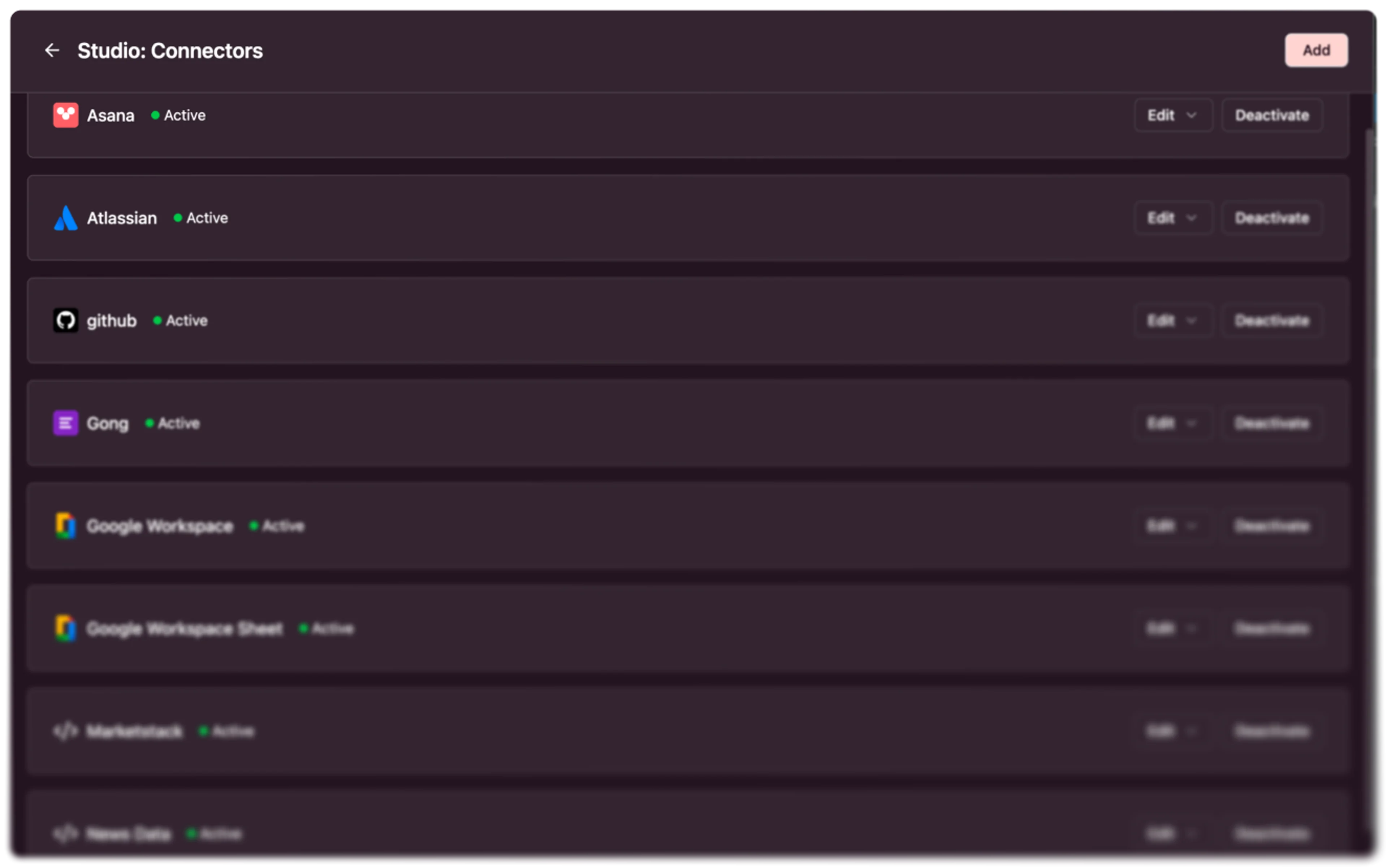
Building with Studio is closer to a conversation than code, describing what you want to happen rather than how, and correcting it when it's wrong rather than starting over. That's easy to undersell until you're the one doing it: no ticket, no engineer sitting next to you, just the thing that's been annoying you for months, finally fixed.
The Hackathon
108 people, three continents, one day. The Slack channel had the energy of people building for themselves, not being assigned a task, so the questions weren't how do I use this, they were can it do this: could widgets talk to each other automatically.
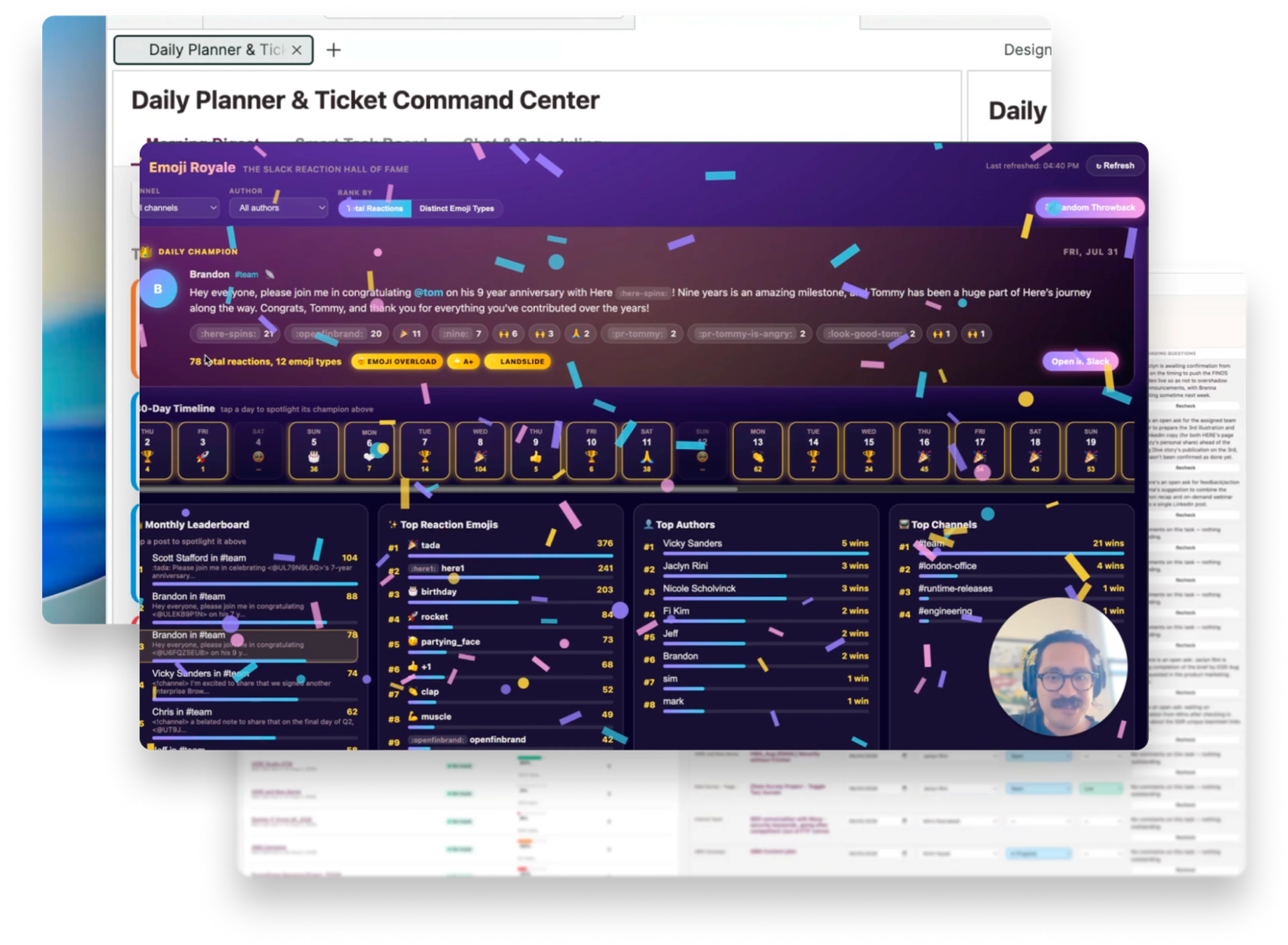
Dozens of apps came in, and the range was the first surprise. Some were exactly what you'd expect, ticket dashboards, unified customer views like Lee's Client360, workflows that mashed two systems into one screen. Others went somewhere nobody briefed them to go, team culture tools and engagement widgets that make a workplace better to be in.
What's Next
Almost every app that came out of it solved a problem someone, or a whole team, had been quietly living with because the tools they use every day weren't built for the job. That's why we're treating these as the start of something, not as hackathon artifacts.
A pattern started to emerge once the submissions were in: different people, working separately, kept solving versions of the same problem. Sales: a cross-app view of a client, exactly what Lee's Client360 had already solved. Engineering: pull requests, not hard because the work was hard, but because the tools around it made it harder than it needed to be. Both, once described plainly, took a day to fix.
Volunteers from the teams who'll use these apps day to day are taking over growth and maintenance of the strongest ones, so the tools their teams get are built around the problems they actually have.
Try It Yourself
None of this needed a hackathon to be true. Lee didn't need a competition to notice his account view was scattered across five logins; he needed a day, and a secure tool that would listen to plain language. That part is available now, to anyone, on whatever's been quietly annoying you or your team.
HERE Studio is currently available in preview. Request access here and we'll get you set up.
Ready to learn more about HERE Studio?
Suggested additional reading
The AI Enterprise Browser: Inside HERE Studio & AI Center
See how HERE Enterprise Browser is becoming a full AI-powered enterprise workspace, including a live look at HERE Studio, the AI app builder built right inside the browser.
Read more -->
The Reason Your AI isn't Scaling isn't the AI
HERE will be at the Gartner Application Innovation & Business Solutions Summit, Sept 14-15 in London. Stop by our booth — here’s why this conversation matters right now.
Read more -->
The Cognitive Command Center: Solving the Last Mile of AI in Asset Management
Financial institutions are investing heavily in AI, but a critical challenge remains: turning intelligence into action across the fragmented reality of enterprise work. At the 2026 Open Source Finance Forum in London, Vicky Sanders, Chief Digital Officer ...
Read more -->